Room 202-3, Building 30, No. 220 Xianggong Road, Xiangzhou District, Zhuhai City
08.00 AM-09.00 PM
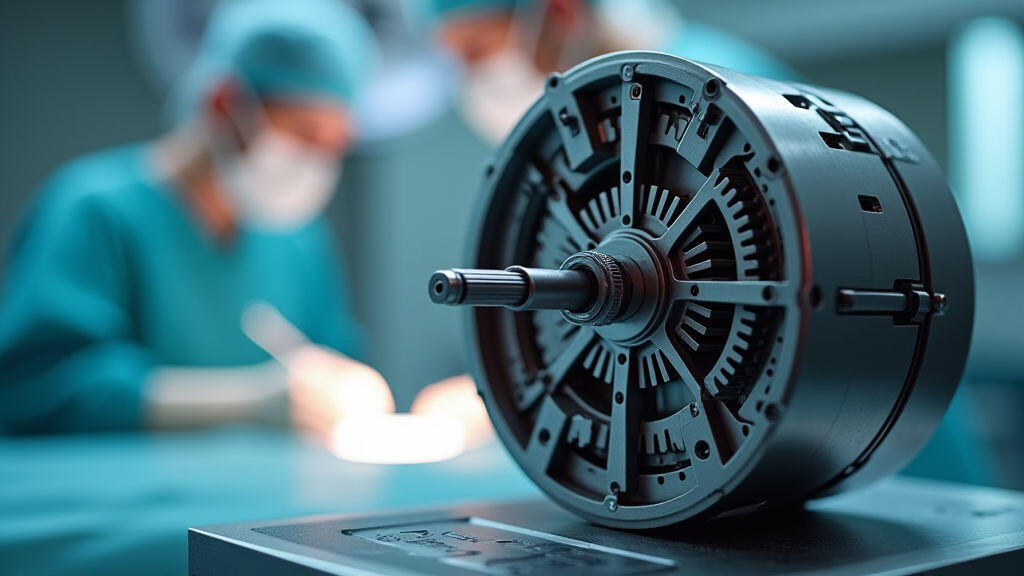
The medical equipment industry is undergoing a rapid transformation, driven by advancements in technology, increasing demands for precision, and a constant push for miniaturization and energy efficiency. At the heart of many of these innovations lie sophisticated gear motors, and new-generation models are poised to revolutionize how medical devices function. This article explores the emerging application trends of these advanced gear motors, highlighting the benefits and potential future impact, especially in light of the recent surge in personalized medicine and remote patient monitoring.
The Evolution of Gear Motors: Beyond Traditional Designs
Traditional gear motors, while reliable, often fall short in meeting the stringent requirements of modern medical applications. They can be bulky, noisy, and lack the precision needed for delicate procedures. New-generation gear motors address these limitations through several key innovations:
Key Application Trends
The combination of these improvements is unlocking new possibilities across various medical device categories. Here are some of the most significant trends:
1. Minimally Invasive Surgery (MIS) & Surgical Robotics:
MIS procedures are growing in popularity, offering patients faster recovery times and reduced scarring. Surgical robots, essential tools for MIS, demand high-precision, low-backlash gear motors to enable delicate movements and accurate instrument control. New-generation gear motors are ideal for powering robotic arms, surgical instruments (scalpels, graspers), and navigation systems. The increasing prevalence of augmented reality (AR) and virtual reality (VR) in surgical training and guidance further emphasizes the need for reliable, responsive motor systems. MES-Drive's advanced gear motors are specifically engineered for these demanding applications, providing the necessary precision and torque to execute complex surgical maneuvers.
2. Implantable Medical Devices:
The miniaturization trend is particularly vital for implantable devices like pacemakers, defibrillators, and drug delivery systems. New-generation gear motors allow for the creation of smaller, more energy-efficient implantables with extended battery life. The focus is on developing motors with biocompatible materials and robust designs to withstand the harsh environment within the body. Furthermore, integrated sensors can monitor device performance and alert physicians to potential issues, enhancing patient safety. The recent advancements in neural interfaces and bio-integrated electronics rely heavily on tiny, high-precision motors for precise actuation.
3. Point-of-Care Diagnostics:
The rise of point-of-care testing (POCT) – diagnostic tests performed at or near the patient – is transforming healthcare delivery. POCT devices, such as blood analyzers, glucose monitors, and diagnostic imaging systems, rely on precise and reliable gear motors for sample handling, fluid dispensing, and image processing. The growing trend of remote patient monitoring (RPM), accelerated by the recent global health crisis, further drives demand for compact, battery-powered devices capable of continuous data collection. MES-Drive's high-efficiency motors enable the development of smaller, lighter POCT systems with extended battery life, facilitating widespread adoption in diverse settings.
4. Drug Delivery Systems:
Precision drug delivery is crucial for optimizing treatment efficacy and minimizing side effects. New-generation gear motors are enabling the development of sophisticated drug delivery systems, including micro-needles, implantable drug pumps, and inhalers. These motors allow for precise control over drug release rates and targeting mechanisms. The development of closed-loop drug delivery systems, where motor performance is continuously monitored and adjusted based on patient needs, is a rapidly growing area.
5. Assistive and Rehabilitation Devices:
Gear motors are fundamental to the operation of a wide range of assistive and rehabilitation devices, including prosthetic limbs, exoskeletons, and mobility aids. Modern designs leverage advanced gear motors to provide smooth, responsive, and energy-efficient movement, enhancing user comfort and functionality. The incorporation of haptic feedback systems, powered by precise motor control, further improves user experience and allows for more intuitive control of prosthetic limbs and exoskeletons.
Challenges and Future Outlook
Despite the significant advancements, challenges remain. Cost optimization, standardization of interfaces, and ensuring long-term reliability in demanding clinical environments are critical considerations. The ongoing advancements in materials science, particularly the development of lightweight and biocompatible materials, will play a vital role in driving further innovation.
Looking ahead, the convergence of AI and machine learning will further enhance the capabilities of medical devices powered by new-generation gear motors. Predictive maintenance algorithms, powered by real-time motor performance data, will minimize downtime and improve device reliability. The democratization of data and the rise of the Internet of Medical Things (IoMT) will allow for remote monitoring and diagnostics, further optimizing device performance and ensuring patient safety. The focus on personalized medicine will demand even greater precision and customization in medical devices, creating new opportunities for advanced gear motor technology.
Conclusion
New-generation gear motors are no longer simply components; they are enablers of innovation in the medical equipment industry. Their superior precision, energy efficiency, and miniaturization capabilities are transforming a wide range of medical devices, from surgical robots to implantable systems and point-of-care diagnostics. As the healthcare landscape continues to evolve, driven by trends like personalized medicine, remote monitoring, and minimally invasive procedures, the demand for advanced gear motor technology will only increase. Companies like MES-Drive are at the forefront of this revolution, paving the way for more sophisticated, reliable, and patient-centric medical devices. The future of healthcare is inextricably linked to the innovation in gear motor technology, ensuring a more connected, precise, and ultimately, healthier world.

Leave A Reply
Your email address will not be published. Required fiels are marked